




How to Stay Safe from Heatstroke in Summer: Parekhs Hospital Guide
Summer heat can become dangerous when the body is not able to cool itself properly. Every year, hospitals see a rise in cases of dehydration, exhaustion and serious heat-related emergencies during extreme weather conditions.
At Parekhs Hospital, we also regularly treat patients suffering from excessive heat exposure during the summer months. That is why today we want to help you understand simple and effective ways to stay safe, healthy and protected during the hottest time of the year.
What Is Heatstroke?
Heatstroke is a serious medical emergency that happens when the body temperature rises dangerously high because the natural cooling system stops working properly. If treatment is delayed, it can affect important organs like the brain, heart, kidneys and muscles.
Difference Between Heat Exhaustion and Severe Overheating
Heat exhaustion usually causes symptoms like heavy sweating, weakness, dehydration, tiredness and dizziness. However, when the condition becomes more severe, a person may develop confusion, fainting, abnormal behavior. He may also get seizures or even unconsciousness, which needs immediate medical care.
When temperatures become extremely high, the heart and blood vessels have to work harder to cool the body. Excessive sweating leads to loss of fluids and essential body minerals and salts. This will be reducing blood circulation and putting stress on vital organs.
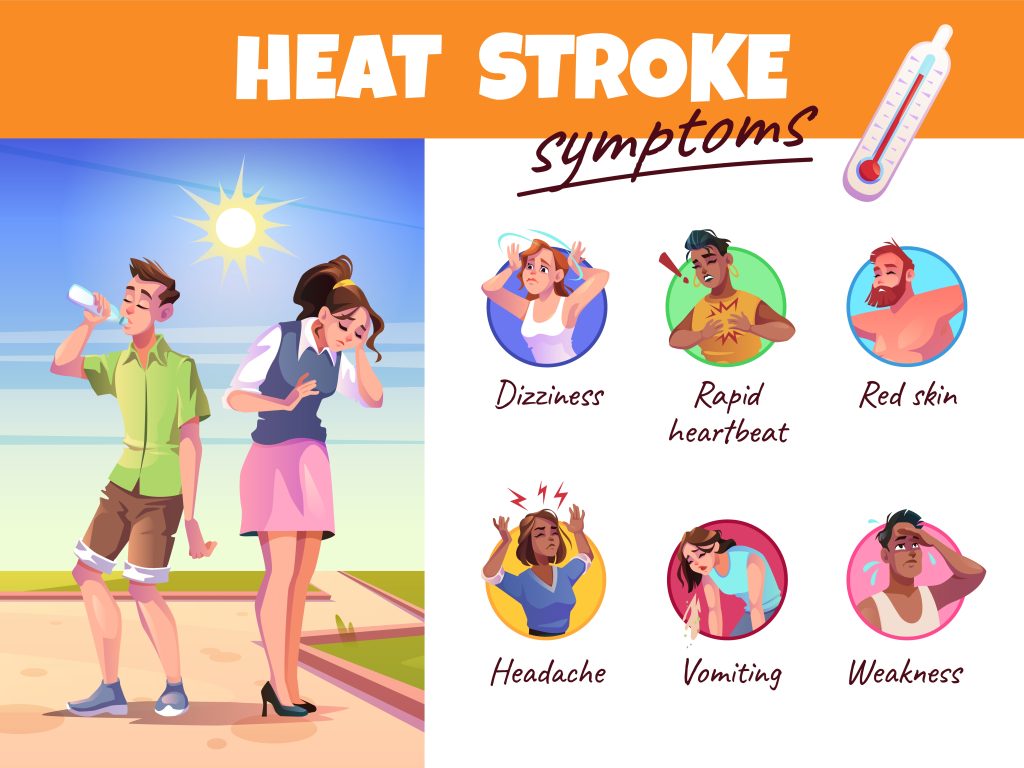
Common Symptoms of Heatstroke
1. High Body Temperature
A body temperature above 104°F along with flushed or very hot skin is an important warning sign.
2. Headache and Dizziness
Many patients complain of severe headache, dizziness and spinning sensation. They can also face difficulty maintaining balance while walking.
3. Excessive Sweating or Dry Skin
Some people sweat heavily in the beginning. Others later develop hot and dry skin once the body’s cooling system starts failing.
4. Nausea and Vomiting
Stomach discomfort, nausea and poor appetite are common symptoms of heatstroke. There culd be repeated vomiting also.
5. Rapid Heartbeat
The heartbeat may become unusually fast as the body struggles to maintain cooling and proper blood circulation.
6. Weakness or Confusion
Muscle weakness, unusual behavior, irritability, confusion are other heat stroke symptoms. Tiredness or slurred speech should never be ignored.
7. Fainting or Unconsciousness
Heat stroke symptoms can worsen very quickly. It may lead to fainting, unconsciousness, collapse or seizures if emergency treatment is delayed.
Who Is Most at Risk?
1. Elderly People
Older adults usually have a weaker thirst sensation and reduced sweating ability. It makes them more vulnerable during summer.
2. Young Children
Children are not able to regulate body temperature as efficiently as adults. They can become dehydrated very quickly.
3. Outdoor Workers
Construction workers, farmers, delivery staff, traffic police and laborers often remain under direct sunlight for long hours.
4. Athletes, Fitness Enthusiasts
Heavy exercise, sports activities or gym workouts during hot weather should be avoided. This can rapidly increase body temperature and fluid loss.
5. Patients with Severe Illnesses
People suffering from diabetes, heart disease, obesity, respiratory disorders or kidney problems may find it harder to tolerate excessive heat.
6. Dehydrated People
People who drink very little water or consume excessive alcohol are at higher risk of serious heat-related complications.
Causes of Heatstroke
1. Prolonged Exposure to Sunlight
Staying under direct sunlight for many hours raises body temperature and speeds up dehydration.
2. Dehydration
When the body does not get enough water, sweating reduces. Then natural cooling becomes ineffective.
3. High Humidity & Extreme Heat
Humid weather prevents sweat from evaporating properly, causing heat to remain trapped inside the body.
4. Intense Physical Activity in Hot Weather
Outdoor sports, heavy workouts and physical labor during peak heat hours are among the top causes of Heatstroke. This can overwhelm the body’s cooling mechanisms.
5. Poor Ventilation or Hot Indoor Environments
Overcrowded rooms, poorly ventilated spaces and extremely hot indoor environments can also trigger dangerous overheating conditions.
Summer Health Tips to Tide Over Peak Summer Safely
1. Stay Hydrated
Drink water regularly throughout the day, even if you do not feel thirsty. Coconut water, lemon water and oral rehydration drinks help maintain electrolyte balance. Avoid too much caffeine, sugary drinks and alcohol as they increase dehydration.
2. Avoid Peak Heat Hours
Try to stay indoors between noon and late afternoon when temperatures are usually highest. If outdoor work is necessary, take frequent breaks under shade and avoid overexertion.
3. Wear Appropriate Clothing
Wear loose cotton clothes, light colors, hats and sunglasses to reduce heat absorption and improve airflow around the body.
4. Eat Light and Healthy Meals
Summer Health Tips – Fresh fruits, vegetables, curd, salads and water-rich foods help maintain hydration and energy levels. Heavy oily meals may increase body heat and discomfort.
5. Keep Your Body Cool
Use fans, cool showers, wet towels or air conditioning whenever possible. Never leave children, elderly individuals or pets inside parked vehicles or poorly ventilated rooms.
6. Never Ignore Early Symptoms
Early treatment of headache, cramps, dizziness, weakness or dehydration can prevent heat stroke from becoming life-threatening.
First Aid for Heatstroke
1. Move the Person to a Cool Area
The primary step towards first aid for heat stroke is to immediately shift the person to shade. If you can move, shift to an air-conditioned room or any cooler place available.
2. Hydrate Immediately
If the person is conscious, slowly give cool water. Can also give oral rehydration fluids in small amounts.
3. Use Cold Compresses or Ice Packs
Apply cool cloth or ice packs around the neck, forehead, armpits and groin. This helps lower body temperature quickly.
4. Seek Emergency Medical Help
Heat stroke can damage organs rapidly. Thus, emergency medical treatment should never be delayed. Rush to the hospital nearby, if confusion or unconsciousness develops in the patient.
When to Consult a Doctor
1. Persistent Dizziness or Dehydration
Consult a doctor if weakness, faintness or inability to drink fluids continues despite proper hydration and rest.
2. High Fever or Unconsciousness
Immediate emergency care is required for high fever, confusion, seizures, collapse or unconsciousness. These may indicate severe heat-related illness.
3. Difficulty Breathing or Chest Discomfort
Shortness of breath, chest pain, irregular heartbeat or worsening fatigue should never be ignored.
Preventive care is always better and safer than emergency treatment. Simple precautions and immediate medical attention for warning signs, can save lives during harsh summer months. Parekhs Hospital encourages everyone to stay alert, protect vulnerable family members. Kindly take care of yourself to avoid dangerous heat-related complications.