





9 NIGHTS, 9 ORTHO TIPS: A Navratri Orthopaedic Checklist by Dr. Dimple Parekh
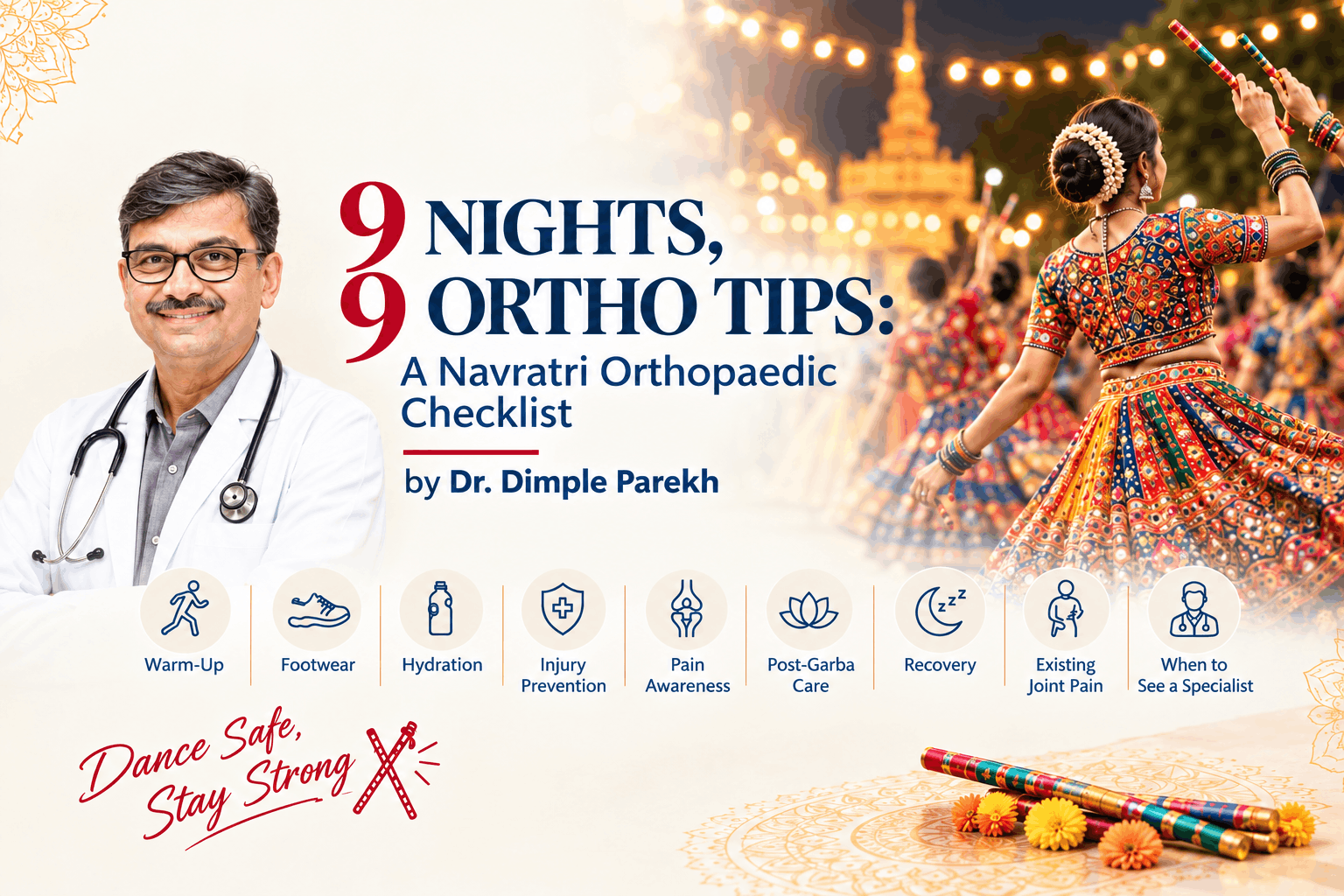
Navratri in Ahmedabad means music, Garba, long nights and plenty of movement. Whether you dance for a few hours or participate throughout all nine nights, your knees, ankles, feet and muscles need the right preparation and recovery.
Garba involves repeated steps, turns, changes in direction and prolonged standing. Without adequate preparation, overuse, fatigue or an awkward movement can contribute to pain or injury.
At Parekhs Hospital, Ahmedabad, orthopaedic care includes knee and joint replacement, arthroscopy/sports injury care, trauma treatment and other orthopaedic services. Dr. Dimple Parekh is the hospital’s Head of Orthopedic Surgery and specializes in hip and knee replacement.
This Navratri, use these 9 practical orthopaedic tips to help keep your celebrations safer and your joints moving comfortably.
1. Warm-Up Before Garba: Why Your Body Needs It
Don’t start dancing immediately after arriving at the venue.
Spend a few minutes preparing your body with gentle movements such as:
- 1. Walking slowly for a few minutes
- 2. Ankle circles
- 3. Gentle knee bends
- 4. Calf and thigh stretches
- 5. Hip and shoulder movements
A warm-up helps gradually prepare your muscles and joints for physical activity. It can also help you identify any stiffness or discomfort before you begin dancing.
Tip: If you already have significant pain or stiffness, don’t try to “dance through it.” Consider getting appropriate medical advice before participating.
2. The Right Footwear for Garba: Protect Your Feet, Ankles & Knees
Your footwear matters more than you may think.
Garba involves repeated steps, turns and movement on your feet. Choose footwear that is:
- 1. Comfortable and properly fitted
- 2. Secure enough to stay on your feet
- 3. Supportive
- 4. Suitable for the dancing surface
Avoid footwear that causes rubbing, feels unstable or makes it difficult to maintain your balance.
Remember: Looking good on the Garba floor should not come at the cost of foot and ankle comfort.
3. Stay Hydrated During Garba: Your Joints Need It Too
Long hours of dancing can make you sweat, especially in crowded venues.
Keep water available and take regular breaks to drink. Don’t wait until you feel extremely thirsty.
Hydration is particularly important when you are dancing for extended periods or spending time outdoors.
Simple rule: Dance, take a break, hydrate and return to the floor when you feel ready.
4. Common Garba Injuries & How to Prevent Them
Repeated dancing and sudden movements can put stress on the lower limbs.
Some problems people may experience during or after intense activity include:
- 1. Ankle sprains
- 2. Foot pain
- 3. Muscle strains
- 4. Knee pain
- 5. Calf discomfort
- 6. Overuse-related pain
You can reduce avoidable risk by warming up, wearing suitable footwear, taking breaks and increasing activity gradually rather than suddenly dancing for several hours.
Don’t ignore fatigue. Tired muscles can affect coordination and movement control.
5. Knee or Ankle Pain During Garba? Don’t Ignore It
A little tiredness after dancing can be expected. Persistent, increasing or significant pain is different.
If you develop knee or ankle pain during Garba:
- 1. Stop or reduce the activity.
- 2. Rest the affected area.
- 3. Avoid movements that make the pain worse.
- 4. Monitor whether the symptoms improve.
- 5. Seek professional assessment if the pain persists or is severe.
Trying to continue dancing despite significant pain can potentially worsen an underlying problem.
6. Post-Garba Care: What Should You Do After Dancing?
Your routine shouldn’t end when the music stops.
After Garba, give your body time to cool down. A short period of gentle walking followed by comfortable stretching can help you transition out of intense activity.
You can also:
- 1. Rehydrate
- 2. Change out of uncomfortable footwear
- 3. Rest your legs
- 4. Get adequate sleep
- 5. Pay attention to any unusual pain or swelling
If you experience an injury, don’t rely solely on home remedies if symptoms are significant or persistent. Appropriate evaluation can help determine what treatment, if any, is required.
7. Recovery Between Garba Nights: Give Your Body Time to Repair
Nine consecutive nights can be demanding, particularly if you aren’t accustomed to prolonged physical activity.
Your recovery routine matters.
Between Garba sessions:
Rest → Hydrate → Eat well → Sleep → Move gently
You don’t necessarily need to be completely inactive on non-dancing hours. Gentle movement can be more comfortable than remaining in one position for a long time.
Most importantly, listen to your body. If pain or fatigue is building from one night to the next, reduce the intensity and give yourself more recovery time.
8. How to Garba Safely If You Already Have Knee or Joint Pain
If you already experience knee, hip, ankle or other joint pain, Navratri doesn’t necessarily mean you have to sit out—but your activity should be appropriate for your condition.
Consider:
- Dancing for shorter periods
- Taking more frequent breaks
- Avoiding sudden twisting movements
- Staying at a comfortable intensity
- Choosing supportive footwear
- Following any exercise or activity restrictions given by your doctor
If you have an existing orthopaedic condition or significant pain, discuss your activity level with your orthopaedic specialist rather than pushing through symptoms.
Parekhs Hospital provides orthopaedic services including joint replacement and sports-injury care, alongside other specialties.
9. When Should You See an Orthopaedic Specialist After Garba?
Not every ache requires a hospital visit. However, certain symptoms deserve professional attention.
Consider consulting an orthopaedic specialist if you experience:
- Persistent knee or ankle pain
- Significant swelling
- Difficulty putting weight on the affected leg
- Reduced range of movement
- Repeated ankle instability
- Pain that continues or worsens despite rest
- An injury that prevents you from performing normal daily activities
Early evaluation can help identify whether the problem is a temporary strain, an injury or an underlying joint issue requiring further care.
Your 9-Night Navratri Orthopaedic Checklist
Before stepping onto the Garba floor, remember:
1. Warm up
2. Wear supportive footwear
3. Stay hydrated
4. Know your limits
5. Don’t dance through significant pain
6. Cool down after Garba
7. Prioritize recovery and sleep
8. Modify activity if you already have joint pain
9. Seek expert advice when symptoms persist
Celebrate Navratri. Protect Your Joints. Keep Moving.
Garba is meant to be enjoyed. A little preparation and awareness can help you make the most of the nine nights while taking care of your knees, ankles, feet and muscles.
For persistent or concerning orthopaedic symptoms, consult a qualified healthcare professional for an individual assessment.
Parekhs Hospital, Ahmedabad
132 Feet Ring Road, Shyamal Cross Road, Satellite, Jodhpur, Ahmedabad, Gujarat 380015
Phone: +91 79 4021 9999
WhatsApp: +91 75729 10011
This article is intended for general health education and does not replace an individual medical examination or advice from a qualified healthcare professional.